Botox for Beginners: How It Works, What to Expect, Results, Risks and Costs
Thinking about Botox for the first time? Learn what the treatment actually does, how the brands differ, what injections feel like and how to decide whether the benefits and upkeep fit your goals.
Save my consultation questions ↗Your first Botox appointment: what to know
What it does
Temporarily reduces activity in selected muscles so expression lines can soften. It does not add volume like a filler.
What it feels like
A series of brief needle pricks. The injection portion is short; consultation and assessment deserve their own time.
When you see it
Changes usually develop over several days. Results are temporary, commonly around three to four months for Botox.
Before you agree
Know the actual brand, areas, intended movement, complete price and follow-up plan. You can have a consultation without having injections.
What is Botox, and how does it work?
Botox Cosmetic is a prescription medicine used to temporarily soften certain expression lines. Its active ingredient, onabotulinumtoxinA, is a purified botulinum toxin type A. In cosmetic treatment, a clinician injects small, controlled amounts into selected muscles.
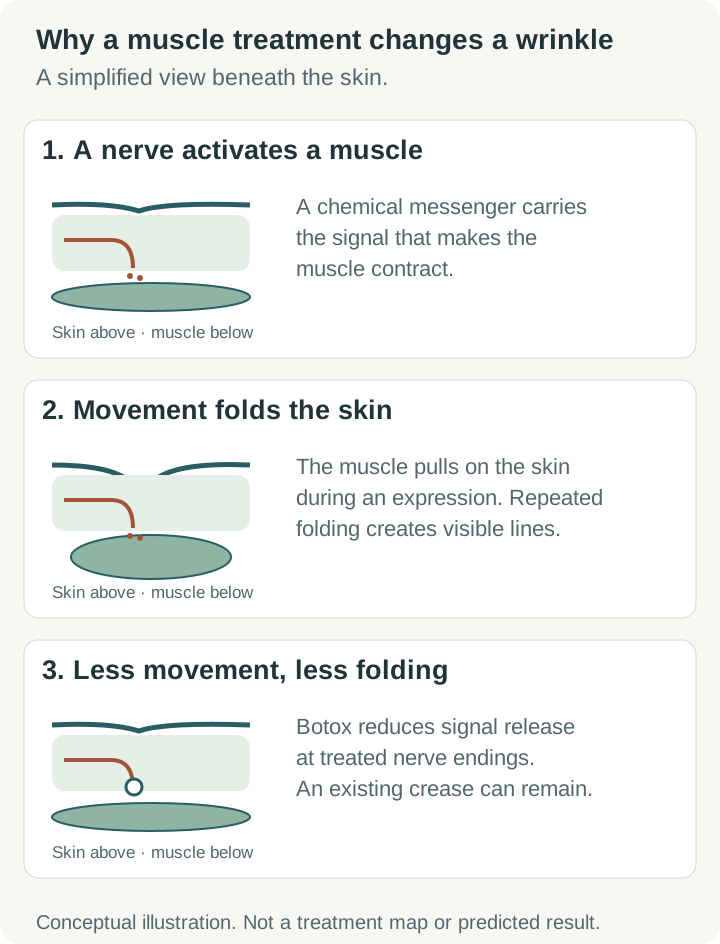
A nerve normally tells a muscle to contract by releasing a chemical messenger called acetylcholine. Botox interferes with that release at the treated nerve endings. The muscle contracts less strongly, so the skin above it folds less during the expression being treated. “Neuromodulator,” “wrinkle relaxer” and “tox” are terms you may hear for this kind of treatment.
That explains both the benefit and the limit: Botox can reduce a movement that repeatedly creases the skin, but it does not replace missing volume, remove excess skin or erase every line already visible at rest. BOTOX Cosmetic: mechanism and indications.
Is this the same toxin that causes botulism?
The medicine is made from botulinum toxin, but prescription treatment uses a manufactured, controlled preparation for a particular purpose. You are not being injected with live bacteria. The biological effect still needs respect: unwanted weakness can occur, and all botulinum toxin products carry a warning about effects beyond the intended area. Product authenticity, medical assessment and trained administration matter. MedlinePlus medicine information.
Botox is a brand. What are Dysport, Xeomin and the others?
People often say “Botox” when they mean any wrinkle-relaxing injection. At an appointment, the distinction matters. Botox Cosmetic is one brand within the botulinum toxin category. A treatment booked casually as Botox may actually use another product, so the consent form and treatment record should name what you receive.
| Brand | Medicine name | Cosmetic use in the US information reviewed |
|---|---|---|
| Botox Cosmetic | OnabotulinumtoxinA | Forehead lines, frown lines between the brows, crow’s feet and platysma bands in the neck. Label |
| Dysport | AbobotulinumtoxinA | Frown lines between the brows in adults younger than 65. Label |
| Xeomin | IncobotulinumtoxinA | Upper facial lines: forehead, frown lines and crow’s feet. Label |
| Jeuveau | PrabotulinumtoxinA-xvfs | Frown lines between the brows in adults. Product information |
| Daxxify | DaxibotulinumtoxinA-lanm | Frown lines between the brows in adults. FDA summary |
| Letybo | LetibotulinumtoxinA-wlbg | Frown lines between the brows in adults. Label |
The table summarizes cosmetic uses, not every medical indication. These products all have botulinum toxin type A activity, but their formulations, clinical studies and labeled units differ. They are not generic copies with automatically interchangeable doses.
Does one brand work better?
There is no useful universal winner for every person and treatment area. Studies may measure first visible change, peak improvement, or how long a chosen threshold lasts. Those are different outcomes. Your anatomy, prior response and proposed treatment matter alongside the brand.
A lower price per Dysport unit, for example, does not automatically mean a cheaper appointment because the unit numbers differ. Our Botox versus Dysport comparison explains the practical ratios used in studies, onset, duration and why those findings need context.
Which wrinkles can Botox improve?
Expression lines are the creases you see when you frown, smile or lift your eyebrows. Clinicians call them dynamic lines. A line still visible when your face is relaxed is often called a static line. Many people have both in the same place.
| What bothers you | Why Botox may or may not help | What to understand before treatment |
|---|---|---|
| Horizontal forehead lines when you raise your eyebrows | Reducing the lifting muscle’s activity can reduce folding. | That muscle also helps lift your brows. A completely motionless forehead is not the right goal for every face. |
| The 11s between your eyebrows when you frown | Treatment can reduce activity in the muscles creating the frown. | A deep crease at rest may soften without disappearing. |
| Crow’s feet with smiling or squinting | Treatment can soften lines from movement around the outer eyes. | The aim should be discussed alongside your smile and natural expression. |
| Fine crepey texture, sun damage or dark spots | These involve skin quality or color, not simply a muscle contraction. | Skincare or a skin-directed treatment may better address the main concern. |
| Hollow cheeks, lost volume or substantial loose skin | Botox does not add volume or remove excess tissue. | A different treatment discussion, or choosing no procedure, may make more sense. |
The approved Botox forehead regimen includes treatment of the frown-line area as well. A proposal should explain the relationship between the muscles that lift and lower the brows, rather than treating “the forehead” as a flat patch of skin. BOTOX Cosmetic label.
Can Botox remove lines that are already visible at rest?
Sometimes they soften as movement is reduced, but complete erasure is not guaranteed. Skin structure, the depth of the crease and other aging changes influence the result. A helpful consultation includes photographs with your face relaxed and with the relevant expression, so you and the clinician are discussing the same line.
For example, if your biggest concern is a crease visible in a neutral photograph, a photo showing only a weaker frown after treatment does not answer the whole question. Explore fine lines and wrinkles or skin texture and resurfacing options.
Will I look frozen? What does a natural-looking result mean?
“Natural” is a preference you need to describe. For one person it means retaining noticeable eyebrow movement with softer lines. Someone else may prefer less movement. Those choices can involve a trade-off between visible expression and how much a line changes.
Botox acts on muscle activity, not facial sensation. A carefully selected plan can soften targeted expressions while preserving movement elsewhere, but no injector can guarantee a particular look. Anatomy, dose, placement and your response all contribute. AAD: facial expression and sensation.
What is “baby Botox”?
It is a marketing term, often used for a smaller-dose or subtler approach. It is not a separate medicine or a standardized treatment plan. Ask for the actual product, areas, intended effect and price. A smaller dose may leave more movement or provide less improvement; the label alone does not tell you what a clinic means.
What happens at a first Botox appointment?
1. Discuss your goal and health
You explain the change you want and disclose medicines, allergies, previous injections, medical conditions and pregnancy or breastfeeding. A consultation can end with a decision to wait.
2. Assess your face in motion
The clinician looks at brow position, symmetry and how muscles move. Relaxed and expressive baseline photos can make the later review more meaningful.
3. Agree on the treatment
Before injections, know the exact product, proposed areas, expected benefit, limitations, risks, cost and follow-up policy. This is the time to raise a concern about movement or heaviness.
4. Injections and aftercare
The skin is prepared and a series of small injections is given. You leave with written instructions and a clear contact route for concerns.
The injection portion can take only minutes, but that is not a reason to rush assessment or consent. You do not need to choose a package, membership or same-day treatment simply because you attended a consultation. AAD: preparing for a consultation.
Does Botox hurt? Will I need numbing?
Expect brief pinpricks or stinging rather than no sensation at all. Discomfort varies by area and person. The needle portion is usually short, and a clinician may use cooling or a topical anesthetic when appropriate. Tell them if you are needle-anxious or have fainted during injections; they can plan the appointment around that. Mayo Clinic: during treatment.
How many injections will I have?
There can be several injection points within one treatment area. A “unit” measures the product’s biological activity; it is not one needle stick. Do not compare two proposals by the number of pricks or the liquid volume alone. The product and total planned treatment are what the quote needs to identify.
When does Botox start working, and how long does it last?
| Stage | What to expect | How to use the information |
|---|---|---|
| The day of treatment | Small needle-site changes may be visible. The final wrinkle effect is not immediate. | Do not judge the result from the mirror before leaving. |
| The following several days | Movement reduction and wrinkle changes develop. AAD describes many people seeing a change in 3–7 days. | A friend’s faster response does not prove your treatment failed. |
| The result review | Assess the result at the interval agreed with the clinician, commonly around two weeks in practice. | Compare the same expressions and lighting. Discuss asymmetry, retained movement and the line at rest separately. |
| The following months | Botox improvements commonly last about 3–4 months; individual duration varies. | Budget for repeat visits only if you decide the benefit is worth maintaining. |
The BOTOX Cosmetic label describes an effect developing during the first week and an approximate three-to-four-month duration for frown-line treatment. The appearance can keep changing after the first noticeable effect. The precise follow-up date is a practice plan, not a reason to delay reporting a concerning symptom. BOTOX Cosmetic label.
Why might the result seem weak or wear off quickly?
First clarify what changed. Did you regain some movement, did a crease become visible again, or was there little improvement from the beginning? Those are different observations. Treatment area, the proposed dose, muscle activity and how you measure the result can all affect the discussion. A returning line does not, by itself, establish resistance to the medicine.
Bring dates and comparable photographs to a review. Repeated extra treatment without a reassessment is not a substitute for understanding a disappointing result. For brand-switching questions, see Botox versus Dysport.
Recovery and aftercare: work, exercise, makeup and sleeping
Botox usually has little interruption to ordinary activities, but “no downtime” can overpromise. Bruising may be visible, you may feel tender, and you need time to see how your face responds before a major event.
| Your question | Practical context |
|---|---|
| Can I go back to work? | Many people return to usual nonstrenuous activities. If your work is strenuous or being photographed matters, discuss those demands before the appointment. |
| Can I rub my face or get a facial? | Avoid rubbing or massaging treated areas afterward. Mayo Clinic advises avoiding massage for 24 hours. Schedule facials or other pressure-based treatments with the treating clinician. |
| Can I lie down? | Mayo Clinic advises remaining upright for 2–4 hours. Follow the instructions provided for your treatment; accidentally bending over is not a reason to assume you caused a complication. |
| What about the gym? | AAD advises waiting two hours before strenuous activity. Your clinician may give a longer restriction for your plan; get a specific time rather than interpreting “normal activities” as every activity. |
| Can I wear makeup? | AAD says makeup can be applied after treatment, gently and without pressing or rubbing. Follow any additional instructions from your clinician, especially if an injection point is still bleeding. |
| Should I book just before a wedding? | A first treatment shortly before an important event leaves little room for bruising, review or an unwanted result. Discuss a planning buffer well ahead of the date. |
These are general planning points, not a claim that one aftercare routine prevents every complication. Symptoms such as new vision problems or trouble swallowing require assessment regardless of whether you followed every instruction. Mayo Clinic: after the procedure. AAD: aftercare.
What are the side effects and risks?
Possible effects include local tenderness, bruising, swelling and headache. Unwanted muscle effects can change brow height, eyelid position or symmetry. A more detailed account of timing, trial rates and next steps is in our forehead Botox side-effects guide.
All botulinum toxin medicines carry a warning about effects beyond the injection site. The Botox label also notes that no definitive serious distant-spread reports have been associated with its listed, labeled cosmetic doses. Both facts matter: serious warning symptoms deserve action, without treating complications from every medical use as the expected experience of a cosmetic visit. BOTOX Cosmetic warnings.
Can a discount be safe? How do I avoid counterfeit product?
Price is not an authenticity test. Verify the professional’s license, relevant training, responsible medical oversight and follow-up arrangements. Ask which product is being used and whether it comes from an authorized source. FDA investigations have involved counterfeit product administered by both licensed and unlicensed individuals, so a license alone is not the entire check. FDA counterfeit Botox alert.
Use the provider decision guide ↗Who should wait or avoid treatment?
A known allergy to a botulinum toxin product or an ingredient, or infection at the planned injection site, can rule out Botox Cosmetic. Pregnancy, breastfeeding, muscle or nerve conditions, existing swallowing or breathing problems and certain medicines require an individualized discussion.
Bring your medication and supplement list and details of any toxin treatment, including medical treatment for migraine or sweating. Do not stop prescribed medicines to make a cosmetic appointment possible. Our guide to who should not get Botox explains the difference between a contraindication, a precaution and a reason to postpone.
Is there a best age to start preventive Botox?
There is no age at which everyone needs it. Cosmetic treatment is optional, and the approved cosmetic uses discussed here are for adults. A decision should begin with the lines that actually bother you, your expectations and the recurring commitment. Long-term prevention claims should not be turned into a promise that starting young will prevent future aging.
How much does Botox cost, and what does the quote include?
A practice may charge by unit, by area or for a complete visit. The meaningful total includes the product and areas proposed, any minimum charge, consultation fee, membership conditions and the policy for review or additional treatment.
Forty units is the labeled combined Botox forehead-and-frown-line regimen, not a universal dose for everyone or every “upper-face” package. Your clinician’s plan may differ. Package savings also depend on whether you use the visits, whether they expire and what happens if you stop treatment.
See dated prices, annotated quotes and the Botox cost calculator ↗Cosmetic treatment is generally paid out of pocket. Insurance coverage for a separate medical indication does not make cosmetic forehead treatment covered. AAD: preparation and cost questions.
Botox, filler, skincare or resurfacing: which discussion fits?
| Approach | What it works on | An important limitation |
|---|---|---|
| Botulinum toxin | Muscle activity behind selected expression lines. | Temporary effect; does not add volume or treat every skin concern. |
| Dermal filler | Selected volume or contour concerns using an injected material. | Different procedure and risks, including serious vascular complications. It is not a universal substitute for Botox. |
| Skincare and sun protection | Skin maintenance, sun protection and, with suitable products, some fine lines or uneven appearance. | Does not reproduce a targeted prescription muscle-relaxing effect. |
| Laser resurfacing or other skin-directed procedures | Skin surface and remodeling goals such as selected texture or scar concerns. | Recovery and pigment risks can be substantial; choose by the actual concern. |
| No procedure | Avoids the treatment, expense and procedure-related risks. | Leaves the concern untreated, which can still be an acceptable choice. |
If the concern is mostly skin texture rather than expression, our laser resurfacing guide and skin texture guide explain those options. Combining procedures is not automatically better; each proposed step should have a clear purpose. Mayo Clinic: wrinkle treatment options.
First-time Botox questions people often leave with
What happens if I stop getting Botox?
The effect wears off and muscle movement returns. Stopping does not create a requirement for another treatment. Your face continues to age, so a comparison years later also reflects time and other skin changes. Mayo Clinic: stopping treatment.
Will my skin feel numb?
Botox is not a local anesthetic and is not intended to remove sensation. You may notice changed movement or temporary injection-site tenderness. Persistent numbness or a new concerning symptom deserves medical advice.
Can I get Botox and filler on the same day?
They are different treatments and sometimes form part of a clinician’s combined plan. That does not mean you need both. Understand what each would address, its risks and the proposed sequence before agreeing.
Is a lip flip or jaw-slimming treatment the same as forehead Botox?
It uses a toxin medicine for a different target, with different functional risks. These uses are outside the Botox Cosmetic indications in the label reviewed. For example, affecting lip muscles can change drinking or speech, while masseter treatment involves chewing muscles. A forehead consent discussion is not enough. Cleveland Clinic: lip-flip limitations.
Can Botox remove acne or make my skin permanently smooth?
It is not an established general acne treatment or a permanent resurfacing procedure. Changes in movement, light reflection or perceived smoothness should not be confused with treating active acne or structural scars.
What should I keep from my first visit?
Keep the product name, treatment date, areas and dose if available, baseline photographs, aftercare, price and review plan. These help if you return to the same practice or discuss a future treatment elsewhere.
Do I have to decide during the consultation?
No. You can take the proposal away, compare the costs and alternatives, or choose not to have treatment. A useful consultation should leave you clearer about your options.
Take a useful question list to your first consultation
Save questions about the brand, movement you want to keep, health history, result review and full cost. Your plan also keeps the relevant guides together. Saving does not book treatment or authorize a referral.
Save my first-Botox consultation plan ↗Sources and editorial notes
Sources checked September 21, 2026. NuWays MD provides education, not medical care. Clinical review is pending. Product labels establish approved uses and warnings; research findings apply to the populations and treatments studied.
- BOTOX Cosmetic prescribing information: mechanism, approved areas, warnings and duration of the frown-line effect.
- AAD botulinum toxin FAQs: general experience, expression, sensation and expectations.
- AAD preparation guidance: consultation and cost planning.
- Mayo Clinic: Botox injections: appointment, aftercare and risks.
- MedlinePlus: medicine category, warnings and history to disclose.
- Dysport prescribing information: brand identity, indication and non-interchangeable units.
- Xeomin prescribing information: current upper-face indications.
- Jeuveau product information: medicine name and frown-line indication.
- FDA Daxxify trial snapshot: medicine name and cosmetic approval context.
- Letybo prescribing information: medicine name and cosmetic indication.
- FDA counterfeit Botox alert: authentic supply and professional qualifications.
- Cleveland Clinic: lip flip: how lip-muscle treatment differs from forehead treatment.
- AAD overview: general onset range.
- Manufacturer consultation material hosted by ASDS: two-week review as a practice example, not a universal result deadline.
- Mayo Clinic: Botox for wrinkles: what happens after stopping.
- Mayo Clinic: wrinkle treatments: different purposes of skin treatments and fillers.
Illustrations are conceptual. Observation examples and price arithmetic are fictional, not patient reports. How we prepare and update guides.