Less shaving. A realistic plan for getting there.
Understand whether laser hair removal deserves a consultation, what a treatment series involves and how to compare a package before paying.
Save this topic ↗The practical answer
Laser hair removal aims to reduce future hair growth. It is worth discussing when repeated shaving or other temporary removal is becoming a burden and you can commit to a series of visits. It is a weaker proposition if you expect every hair to disappear permanently, need an immediate result for an event or cannot follow the preparation and aftercare plan.
The treatment targets pigment in the hair and uses heat to affect the follicle. Hair and skin characteristics influence the treatment plan. Repeat visits and later maintenance may be needed. Mayo Clinic explains the mechanism and limits.
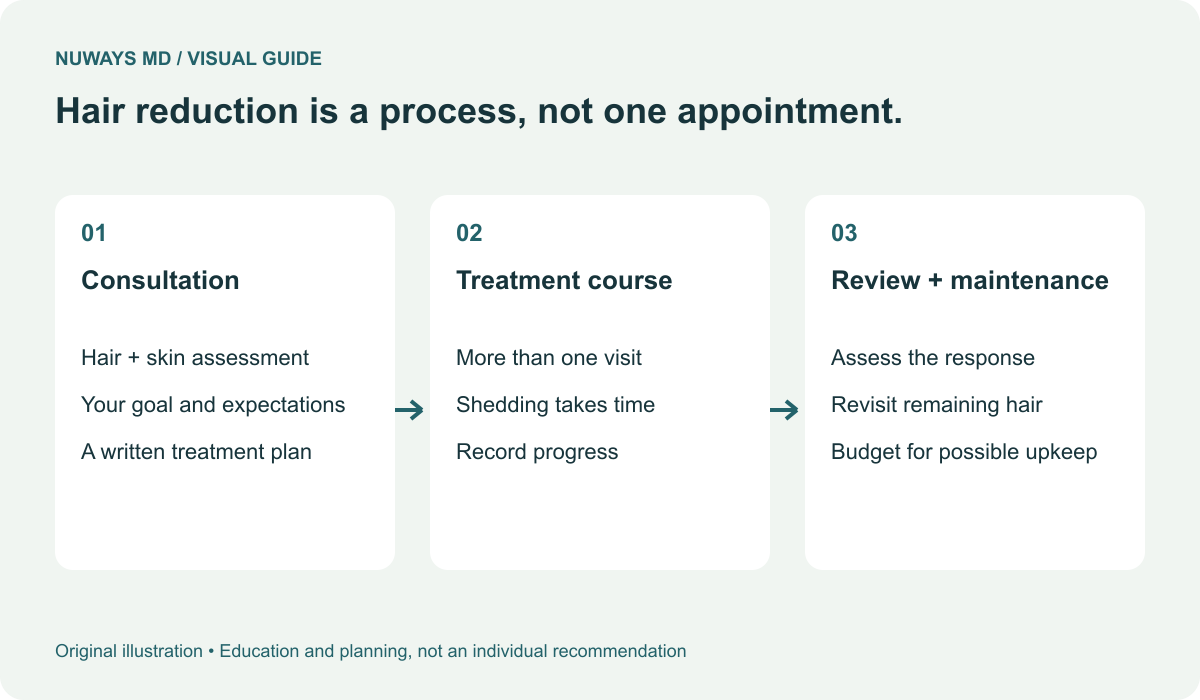
What makes a consultation worthwhile?
A practical reason to consider it
You want to spend less time on recurring hair removal and can describe the areas that bother you. Bring that goal to the consultation. “Never shave again” is a different promise from a worthwhile reduction.
A reason to slow down
You are being sold a large package before anyone has assessed your hair, skin and expectations. A familiar machine name does not replace that assessment.
Skin tone belongs in the conversation
Darker skin can be treated, but device selection, settings and relevant operator experience matter. Ask for experience with people whose skin resembles yours, rather than accepting “all skin types” as a complete explanation.
Color and cause can change the plan
A clinician should assess the hair you want treated and explain the expected response. If hair growth has changed unexpectedly, make the reason for that change part of the medical conversation before committing to a cosmetic package.
Tell the clinician about medicines, recent tanning, scarring tendencies and relevant skin history privately. The AAD provides a consultation preparation list; it is not a self-screening test.
Which route are you actually comparing?
| Route | The decision it serves | The question that changes the choice |
|---|---|---|
| Professional laser treatment | Investigating longer-term hair reduction with a clinician-led plan. | How much reduction is realistic for this hair and skin, and what maintenance might remain? |
| Continued temporary removal | Keeping your current routine while avoiding a treatment series or upfront package. | Is the inconvenience large enough to justify the cost, visits and treatment risks? |
| A home-use light device | A separate product decision, not the same thing as professional laser treatments. | Does the exact device labeling cover your skin, hair and intended body area? Do not assume clinic claims apply at home. |
| Electrolysis consultation | An alternative to ask about if a clinician says your hair is unlikely to respond well to laser. | What time, number of appointments and skin risks apply to the actual area? |
This is a research framework, not a clinical ranking. “Best” is the option that addresses your goal with an acceptable commitment after suitability is assessed.
What happens between the appointment and the result?
After a visit
Some redness, swelling and discomfort are common. The AAD describes these as usually short-lived. Follow the instructions you receive and allow for visible skin changes even if you can resume ordinary activities.
Across the series
Treated hair may shed over days to weeks. A photograph taken right after a visit cannot show the final reduction. Ask how progress will be recorded and what would trigger a review of the plan.
Do not equate retained hair immediately after a visit with failure, or promise that every retained hair is normal. If you are concerned, ask the treating clinician to assess it. Read why hair may not appear to fall out right away. Shedding context: Mayo Clinic.
Price the full series, not just the first session
A low introductory price says little about the amount you may commit. Get a written definition of the treatment area, included visits, any expiry date, cancellation terms and how additional sessions are priced. A bikini-line quote and a Brazilian quote may cover different areas.
| Fictional package comparison | Offer A | Offer B |
|---|---|---|
| Included visits | 6 | 8 |
| Upfront price | $900 | $1,200 |
| Price per included visit | $150 | $150 |
| What the arithmetic tells you | Lower initial commitment | Two more visits prepaid |
| What it does not tell you | Whether six visits will meet your goal | Whether you need or will use the extra visits |
Neither offer is automatically better. If the clinician expects fewer visits, expiry terms are restrictive or you may move, paying less upfront may matter more than a package label. If more visits are reasonably expected, compare the cost of adding them and the refund terms. These are purchasing considerations, not a recommended treatment count.
See published cost context ↗Put your own quote into the budget planner ↗Know the risks before you pay
Burns, blisters, infection, scarring and lasting pigment changes can occur. The AAD describes potential adverse effects. Mayo Clinic also cautions against treatment around the eyes and over tattoos. Ask who will evaluate an unexpected reaction and how to reach them. A package should never make you feel obliged to continue through a concern.
Three questions worth taking with you
- What reduction do you expect for my hair and skin, and what might remain?
- How will you assess progress before recommending more visits?
- What is the complete financial commitment, and what happens if treatment stops?
Keep the useful questions. Leave the pressure.
Save a hair-removal research plan, add a quote when you have one and mark the questions you have answered. Saving does not request an appointment or authorize a referral.
Save my hair-removal research ↗Common questions
Is it permanent?
Think in terms of reduction and a possible maintenance commitment. A promise to eliminate every hair forever is stronger than the expectation described in the clinical resources linked here.
How many visits will I need?
There is no personal treatment count that this article can determine. The AAD describes a series of treatments; your clinician should explain the proposed count and how it will be reassessed.
What if I am researching Brazilian treatment?
Read the dedicated side-effects guide and ask precisely which areas are included. Keep clinical questions about sensitive areas for a private consultation.
Can NuWays MD decide whether I am suitable?
No. We organize education and questions. NuWays MD is not a medical provider, and this page is not medical advice.
Sources and how we used them
Sources checked September 15, 2026. Package arithmetic and the purchasing framework are original NuWays MD examples. Clinical review is pending. No treatment provider or home-device recommendation is being sold on this page.
- AAD laser hair removal FAQs: session expectations, recovery and risks.
- Mayo Clinic laser hair removal: mechanism, skin considerations, shedding and treatment limits.
- AAD preparation: information to discuss privately before treatment.