Brazilian Laser Hair Removal Side Effects: What to Expect and What Needs Attention
A Brazilian laser treatment can leave sensitive skin feeling warm, tender or bumpy. Learn what commonly happens afterward, which symptoms need attention, and how to prepare for a more comfortable experience.
Save my consultation questions ↗Brazilian laser side effects at a glance
Common short-term effects
Warmth, tenderness and small bumps around hairs can follow treatment. These should settle rather than keep worsening.
Get a reaction assessed
Blisters, a suspected burn, worsening pain or a concerning color change need prompt advice. What to do next.
Preparing for treatment
Understand the area, comfort measures and care afterward. Preparation · Aftercare.
What side effects can Brazilian laser hair removal cause?
The most common short-term effects are redness, mild swelling around hair follicles and discomfort. The skin may feel warm or tender, and small bumps can appear where hairs emerge. General laser guidance describes common reactions lasting around one to three days, although the intensity and recovery time vary.
Burns, blisters, infection, lasting changes in skin color and scarring are possible complications. A worsening reaction deserves attention rather than being dismissed as the price of getting a good result. AAD laser hair removal guidance.
What happens during a Brazilian laser treatment?
Brazilian laser hair removal reduces unwanted pubic hair by delivering light energy to pigment in the hair. Heat affects the follicles that produce it. Several appointments are usually needed because hair grows in cycles. The goal is less regrowth and less frequent hair removal; maintenance may still be needed. Laser hair removal explained.
“Bikini” commonly means hair around the underwear line. “Brazilian” usually means more extensive pubic-hair removal. Some people leave a strip or triangle. Clinics differ in the areas included, so agree the external treatment areas before undressing. The term does not mean treatment inside the vagina. Cleveland Clinic’s explanation of bikini and Brazilian terminology.
A typical appointment includes a skin and health check, cleaning the area, protective eyewear and treatment in small sections. Each pulse can feel like a quick hot snap or sting. Cooling may be used for comfort. Hair density, the area, the device and your sensitivity all affect how it feels. AAD description of an appointment.
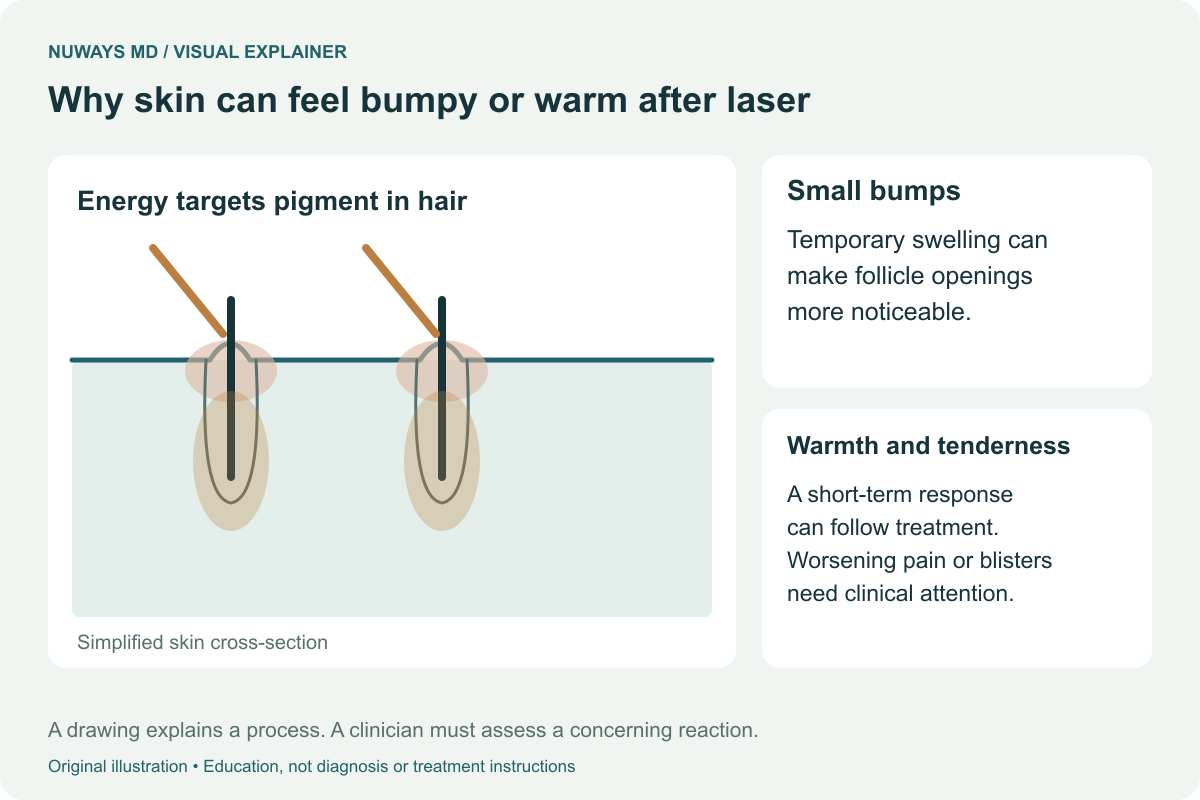
Red Bumps After Brazilian Laser: What Is Perifollicular Edema?
Perifollicular edema means swelling around a hair follicle. It can give treated skin a goosebump-like appearance, sometimes with redness or warmth. The term describes the local response around the hairs rather than a new growth of hair.
Small areas of this swelling can be an expected immediate response to laser. It does not prove that every follicle has been permanently disabled, and more swelling does not mean a better result. Professional guidance distinguishes moderate, separate bumps from excessive or merging swelling that needs attention. BMLA guidance on treatment reactions.
The direction of change matters: skin that is settling is different from increasing pain, spreading redness, blisters or feeling unwell. Have a worsening reaction assessed; use urgent care for severe or rapidly worsening symptoms.
Brazilian Laser Side Effects: What Is Expected and What Needs Attention?
| What you notice | What it can mean | What to do |
|---|---|---|
| Mild warmth, redness or tenderness | A short-term inflammatory response can follow treatment. | Use the care instructions you were given. A cool compress may help comfort. Contact the clinic if symptoms worsen or worry you. |
| Small bumps around hair openings | Temporary swelling can make individual follicles more noticeable. | Avoid rubbing or picking. Have persistent, painful or worsening bumps assessed rather than assuming all bumps are expected. |
| Blisters, raw patches or a suspected burn | Possible skin injury. | Contact the treating clinician promptly. Avoid popping blisters or adding new active products. |
| Darker or lighter patches | Pigment changes can occur and may last. | Arrange an assessment, especially if the change is new, expanding or persistent. |
| Increasing pain, spreading redness or feeling unwell | A reaction that needs medical assessment, including possible infection. | Seek prompt care; use urgent services if symptoms are severe or rapidly worsening. |
| Scarring or a lasting texture change | A possible lasting complication. | Arrange a clinical examination and discuss treatment records and follow-up. |
These are general laser-hair-removal risks. Reliable guidance does not give one universal Brazilian-specific complication rate. Risk depends on skin characteristics, treatment delivery and aftercare. Mayo Clinic risks.
Brazilian Laser on Darker Skin: Why the Laser Type Matters
Melanin is the pigment that gives both skin and hair their color. The treatment aims to heat pigmented hair while protecting surrounding skin. More pigment in the skin makes appropriate device selection and technique especially important. Darker skin can be treated, but the clinician should have relevant experience and explain your individual risk of burns or pigment changes. Mayo Clinic on skin color and laser selection.
Why long-pulsed 1064 nm Nd:YAG is often discussed
For darker skin, a long-pulsed 1064 nm Nd:YAG laser is an important option to ask about. Its wavelength is absorbed less strongly by skin melanin than some shorter wavelengths, which can help protect the surface while treating dark hair. Cooling and the clinician’s technique still matter. DermNet guidance for skin of color.
IPL uses a range of light wavelengths and is not a laser. In a review of studies involving skin types III–VI, long-pulsed Nd:YAG had a lower risk of post-treatment darkening than IPL. That supports a specific discussion of the device and your skin, rather than assuming every hair-removal machine offers the same risk profile. Comparative research.
Tell the practice about a recent tan, sunburn, self-tanner, irritation or a previous pigment change after treatment. A patch test may be part of their assessment, but it cannot guarantee that a later full treatment will be complication-free. Leeds laser assessment and preparation.
How to prepare for the appointment
- Give the clinic a complete medication and skin-history list. Include recent treatments, current products and any previous reaction to laser. Ask about a history of genital herpes or cold sores so they can assess any precautions.
- Follow their shaving instructions. Shaving is commonly part of preparation. Waxing, plucking and similar removal methods can interfere with the intended target, so get the clinic’s timing instructions.
- Discuss recent sun exposure and tanning. Treatment may need to wait. Do not conceal a tan to keep an appointment.
- Arrive knowing what is included. Agree which hair to remove, which hair to keep and whether any additional external areas cost extra.
- Plan around comfort and privacy. Ask who will be in the room, what draping is available and whether you can request a chaperone. You can ask to pause or stop.
Clinical preparation should follow the treating practice’s assessment. AAD preparation questions.
Should you use numbing cream?
Only use a numbing product if the treating clinician has approved the product, amount and application area. The FDA has warned that high-concentration lidocaine products marketed for cosmetic procedures can cause serious harm, especially with excessive application or covering the skin. Buying a stronger cream online is not a safe shortcut. FDA warning about topical pain-relief products.
Brazilian Laser Hair Removal Aftercare: Sex, Showers and Exercise
While the skin feels warm or tender, keep care gentle and reduce heat and friction. Use a cool compress for comfort, avoid rubbing and choose clothing that does not press on sore areas. Follow any longer restrictions in your own written aftercare. AAD aftercare guidance.
| Everyday question | A practical approach |
|---|---|
| What underwear or clothing should I wear? | Choose loose, comfortable clothing while the area is tender. If a seam or fabric rubs, switch it. Keep friction low until the skin feels settled. |
| Can I shower? | Use lukewarm water rather than a hot shower, clean gently and pat dry. The Birmingham NHS leaflet advises avoiding hot baths and showers for the first 24 hours. |
| When can I exercise or use a sauna? | Postpone activities that add heat, sweat or rubbing while skin is irritated. Timing varies by protocol: the NHS examples below range from 24 hours for heat-related restrictions to seven days for strenuous exercise and heat. |
| When can I swim or use a hot tub? | Wait for the interval in your aftercare instructions and for irritation to settle. Published NHS protocols differ substantially; broken or blistered skin needs assessment rather than a routine return to swimming. |
| When can I have sex? | Avoid friction over tender or irritated treated skin. Resume only when the skin has settled and any clinic restriction has passed. The sources reviewed do not establish one universal 24–48-hour rule. |
| Can I shave or exfoliate? | Do not scrape sore skin or scrub to speed shedding. Restart shaving when your aftercare allows and the skin tolerates it. Leave loosened hairs to release naturally. |
| What should I apply? | Stick to the aftercare products recommended for the treated area. Hold off on fragranced or exfoliating products while it is irritated, and follow the instructions for restarting them. |
Why you will see different timeframes: Birmingham’s NHS leaflet advises avoiding hot baths, showers, saunas and swimming for 24 hours. Leeds advises seven days for strenuous exercise, swimming, saunas and hot bathing. These are individual clinic protocols, not a range to choose from. Follow your treating clinic’s instructions; persistent soreness is a reason to wait and seek advice. Birmingham aftercare. Leeds aftercare.
If you were given no instructions and the clinic is closed, keep the area cool and comfortable, avoid friction and postpone optional heat or swimming activities until you can get advice. For a worrying reaction, use an available healthcare service rather than waiting for the clinic to reopen.
Does Brazilian Laser Affect Fertility or Cause Permanent Harm?
Can it affect fertility?
Laser hair removal is intended to act on hair follicles in the skin, not reproductive organs. However, the sources reviewed here do not provide Brazilian-specific fertility studies that would support an absolute “zero risk” claim. If fertility, pregnancy or an underlying condition is part of your concern, raise it at the medical consultation.
Can you have it during pregnancy?
Tell the practice if you are pregnant or may be pregnant. Cleveland Clinic lists pregnancy as a reason to discuss avoiding laser hair removal with your healthcare provider. A treatment being cosmetic and external does not remove the need for that discussion. Cleveland Clinic safety guidance.
Can the skin be permanently damaged?
Lasting pigment change and scarring are recognized possible complications. This is why screening, appropriate treatment and follow-up matter. Most short-term irritation is a different experience from those complications, but a reaction that is worsening should be assessed rather than brushed off.