Botox Side Effects on the Forehead: What to Expect and When to Get Help
Bruising, headache, heavy brows or a drooping eyelid after Botox can raise very different questions. Understand why these changes happen, what timing can tell you and when to contact a clinician.
Jump to the symptom guide ↗Forehead Botox side effects: the quick answer
Around the needle sites
Small bruises, redness, swelling and tenderness can follow injections. Improvement over time matters; increasing pain or spreading redness needs a call.
Headache or heaviness
Headache is a reported effect. A heavy forehead, lower brow and drooping eyelid can feel similar but involve different changes.
Get help immediately
Trouble breathing, swallowing or speaking, or tongue or throat swelling, needs immediate medical attention. Do not wait for a review appointment.
What are the side effects of Botox on the forehead?
The main effects people notice after forehead Botox are bruising or soreness where the needle entered, headache, a tight or heavy feeling, and occasionally a change in brow or eyelid position. Some happen around the time of injection. Others become apparent as the medicine starts affecting muscle movement over the following days.
If you are looking in the mirror wondering whether a change is expected, describe both what you see and what you feel. “My forehead feels tight” is different from “my eyebrow is visibly lower” or “the edge of my upper eyelid is covering more of my eye.” Those details help a clinician assess you; a photograph alone cannot establish the cause.
This article focuses on cosmetic forehead treatment with Botox. Botox is a brand of botulinum toxin, and side-effect lists for other brands, other injection areas or treatment of medical conditions cannot be treated as forehead-specific risk estimates. Mayo Clinic: Botox injections.
Common effects, changes to call about and urgent symptoms
| What you notice | What it can mean | A useful next step |
|---|---|---|
| A small bruise, tender spot or mild local swelling | An injection can disturb small blood vessels and nearby tissue. This does not, by itself, tell you how the cosmetic result will turn out. | Follow your written aftercare. Contact the practice if swelling, redness or pain increases, the area becomes hot, or bleeding persists. |
| A headache without other symptoms | Headache occurred in cosmetic trials, but a headache after treatment can also have another cause. | Contact the practice about a persistent or unusual headache. Sudden severe headache, especially with weakness or vision changes, requires emergency assessment. |
| Heavy forehead, lower eyebrow or uneven arch | The forehead muscle helps lift the brows. Altered movement can change their position. | Contact the treating clinician promptly and describe when it began. Do not try to correct it with massage or another injection elsewhere. |
| The upper eyelid itself is lower | This may be eyelid ptosis, meaning drooping of the lid. It needs assessment, including consideration of causes unrelated to Botox. | Contact a clinician promptly. New double vision, eye pain, inability to close the eye or other neurological symptoms need urgent assessment. |
| Trouble swallowing, speaking or breathing; tongue or throat swelling | Possible serious systemic effect or allergic reaction. | Seek emergency medical care now. |
This table is an orientation aid, not a way to diagnose yourself. If symptoms are severe or worsening, their severity matters more than whether they appear on a “common side effects” list. MedlinePlus drug information.
How common are headache and drooping after forehead Botox?
The BOTOX Cosmetic prescribing information reports results from two trials of forehead lines treated together with the frown lines between the brows. Among 665 adults in the Botox group, headache was reported in 9%, eyelid droop in 2% and brow droop in 2%.
| Reported effect | Botox group: 665 adults | Placebo group: 315 adults |
|---|---|---|
| Headache | 58 people; 9% | 17 people; 5% |
| Eyelid droop | 12 people; 2% | 1 person; less than 1% |
| Brow droop | 13 people; 2% | 0 people |
| Skin tightness | 10 people; 2% | 0 people |
The percentages are rounded. A placebo group received injections without the active medicine, which helps show why not every headache after an appointment can be attributed to Botox. These figures do not predict your individual risk or describe every product, dose or injection pattern. BOTOX Cosmetic label, Table 7.
Bruising, swelling, redness, pain and bleeding after injections
A needle passes through skin before the medicine reaches its target. That can leave a tender point, a small raised area or a bruise. A bruise may be more noticeable later than it was when you left the practice. It does not mean the medicine has spread or that you will develop a drooping eyelid. AAD describes bruising as lasting about a week when it occurs; the size of the bruise and your health or medicines can affect that experience.
A few pinpricks can sting even during a short appointment. Severe pain, continued bleeding or a progressively inflamed area should not be dismissed as the normal price of treatment. Report what is changing, rather than waiting for an arbitrary number of days.
What can you reasonably do at home?
- Use the written aftercare you were given. Keep the area clean and avoid rubbing or vigorously massaging the injection sites.
- If the practice recommended a cool compress, use it gently with a clean barrier rather than pressing ice directly onto the skin.
- For pain relief, check which medicine is suitable with your clinician or pharmacist, particularly if you already take medicines that affect bleeding.
- Keep a dated photograph if the appearance changes. Use similar lighting and a relaxed expression so the comparison is useful.
Do not stop prescribed blood thinners on your own. A clinician may choose to postpone an elective procedure rather than interrupt a medicine you need. Tell them about prescriptions, aspirin, over-the-counter pain relievers, vitamins and supplements. AAD: preparation. AAD: injection effects.
Headache after Botox: what should you pay attention to?
A headache is one of the better-documented reactions after combined forehead and frown-line treatment. Its presence does not prove something went wrong, but neither does a trial percentage explain an individual headache.
Write down when it began, whether it resembles headaches you have had before, whether it is improving, and whether you also have nausea, fever, visual symptoms or weakness. A headache that is persistent, worsening or different from your usual pattern deserves medical advice.
Cosmetic forehead injections are also different from the treatment protocol used for chronic migraine. Having cosmetic Botox does not establish that a new headache is harmless or that it should have been prevented. MedlinePlus: cosmetic and medical uses.
Heavy brows versus droopy eyelids: what is the difference?
The frontalis is the forehead muscle that raises the eyebrows. Botox reduces activity in the treated muscle. If brow-lifting activity is reduced more than suits your anatomy, the eyebrow can sit lower and the skin above the eyelid may feel heavier. This is brow ptosis.
With eyelid ptosis, the upper eyelid margin itself sits lower. One explanation after toxin injections is an unwanted effect on the muscle that lifts the lid. Some people already have low brows or subtle eyelid droop and use their forehead muscles to compensate, which is one reason a careful examination before treatment matters. Upper-face complication review.
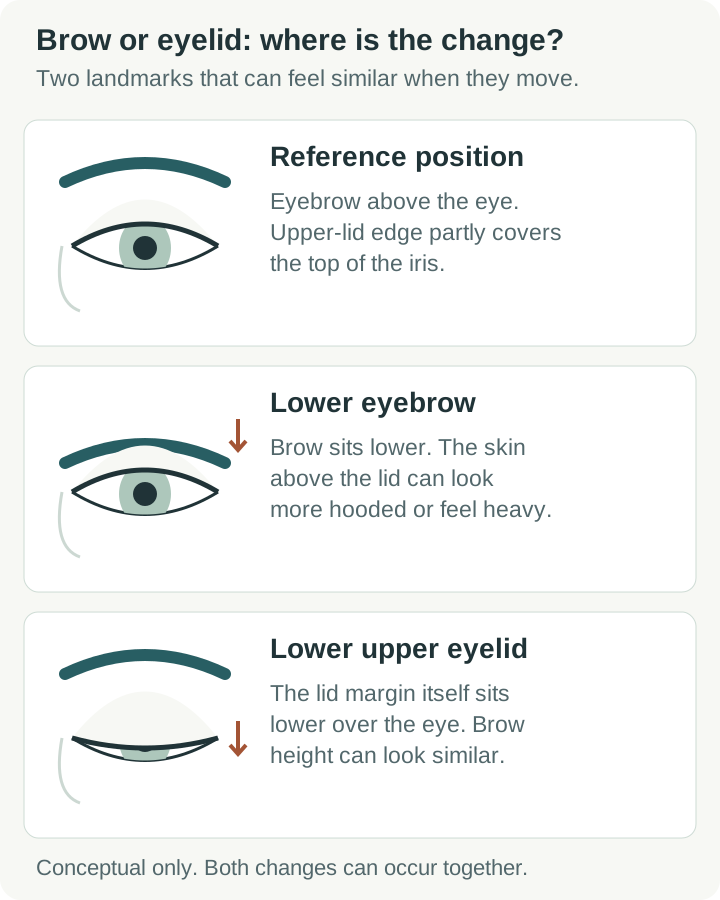
| Change | What you may notice | Why the distinction matters |
|---|---|---|
| Lower eyebrow | The brow is closer to the eye; upper-lid skin may look more hooded. | An eye drop that affects a small eyelid muscle does not restore forehead muscle activity. |
| Lower eyelid margin | The upper lid covers more of the eye, even if brow height looks similar. | A clinician may consider prescription treatment for selected cases after an eye assessment. |
| Uneven or unusually arched brow | One side or the outer brow moves differently. | The clinician needs to review your baseline shape and which muscles are still moving before deciding whether any adjustment would help. |
When can drooping appear, and how long can it last?
Published reports of toxin-related eyelid droop describe onset around 3–14 days after injection. Many cases improve over several weeks, but some last longer, including reports lasting months. This is not a deadline to wait out before seeking care, and it should not be applied automatically to brow heaviness. Eyelid ptosis review.
Can eye drops or more Botox fix it?
A clinician may use prescription drops such as apraclonidine in selected eyelid-droop cases. They act on another small muscle that can raise the lid slightly; they do not remove Botox from the body. Eye conditions, medicines and the actual cause of the droop affect whether drops are appropriate. Do not use someone else’s prescription or ordinary redness-relief drops as a substitute.
An adjustment may be considered for a particular brow imbalance, but adding more toxin can also worsen weakness. Assessment comes first. Avoid home “reversal” techniques and do not book a second injector to correct a problem without sharing the first treatment record.
How timing helps explain a change
| When you notice it | What timing can help you discuss | What timing cannot establish |
|---|---|---|
| During or soon after the appointment | Needle-site discomfort, small local bumps, bleeding or an immediate reaction. | That any rapidly worsening swelling is routine. |
| Over the following days | Bruising may become visible; muscle movement and brow appearance can begin to change. | That every headache or eye symptom is caused by Botox. |
| Around the planned result review | Compare relaxed and expressive photographs with your baseline and discuss any unwanted movement changes. | That a concerning symptom should be ignored until the review. |
| Symptoms persist or worsen | The clinician can reassess the diagnosis and next steps rather than simply repeat an initial reassurance. | A guaranteed date for recovery. |
Three examples of how to describe what you notice
These are fictional observation examples. They show how to communicate a concern, not how to identify your own diagnosis.
“There is a small bruise where I was injected.”
Useful detail: it appeared the next morning, is not spreading, and there is no increasing heat or pain. Keep following the practice’s aftercare and report a worsening trend. A bruise is not a measure of the treatment’s eventual wrinkle effect.
“My forehead feels heavy and my brows look lower.”
Useful detail: the change began several days after treatment and is clearer with your face relaxed. Contact the clinician and show a baseline photo. Brow position, eyelid position and reduced movement need to be assessed together.
“My eyelid is lower and I am seeing double.”
New double vision changes the next step. Seek immediate medical assessment rather than treating this as a cosmetic asymmetry or waiting for a scheduled touch-up.
Dry mouth, nausea and difficulty swallowing: are they forehead side effects?
Dry mouth, nausea and constipation appear in broad medicine information covering many Botox uses. That does not make them common reactions to cosmetic forehead injections. Report bothersome or persistent symptoms and tell the clinician about other medicines or illnesses that could contribute.
Difficulty swallowing is different from an uncomfortable dry mouth. New trouble swallowing, speech changes or breathing symptoms after treatment need immediate medical attention. These symptoms should not be treated as a brief inconvenience expected to settle on its own.
A skin rash or itching also needs advice. Rapid swelling of the lips, tongue or throat, wheezing, trouble breathing or faintness can indicate a severe allergic reaction and warrants emergency help. BOTOX Cosmetic safety information.
Is forehead Botox safe, and how can you reduce avoidable risk?
Botox Cosmetic is an approved prescription treatment with known benefits and risks. Approval does not guarantee an uncomplicated result. Your anatomy, health, product, treatment plan and the person administering it all matter.
- Choose a licensed professional with relevant facial-anatomy training and an accessible process for complications. Find out who assesses you and who is responsible for follow-up.
- Give an accurate history of previous injections, eye or facial surgery, drooping, muscle weakness and earlier reactions.
- Confirm the exact brand and that the practice obtains it through authorized sources. FDA investigations have documented harm involving counterfeit products.
- Get written aftercare and a contact route before leaving. Keep the product, date, areas and dose from the treatment record if available.
Price alone cannot verify safety. A discount is not proof of counterfeit product, and a high price is not proof of competence. FDA: authentic product and trained providers. How to evaluate an aesthetic provider.
Who should discuss delaying or avoiding Botox?
Known allergy to a botulinum toxin product or an ingredient, and infection at the planned injection site, are formal reasons not to use Botox Cosmetic. Pregnancy, breastfeeding, neuromuscular conditions, some medicines and existing eyelid or brow problems require a more specific discussion; they should not be collapsed into one universal checklist.
Read the guide to conditions, medicines and reasons to wait ↗Make a symptom record for your clinician
A short record can make the conversation more useful: treatment date and product, when the change started, what is different, whether it is improving or worsening, and the advice you have already received. You can type below and download a copy, or print a blank worksheet.
Your Botox symptom record
Use your own words. “My right upper eyelid looks lower” is more useful than guessing a diagnosis.
Private to this open page. What you type is not sent to NuWays MD, saved to your account or kept after reload. Download a copy before leaving. Downloads remain on your device; choose where you keep or share them.
This is a record for a clinician, not a medical assessment or a monitored message. For trouble breathing, swallowing or speaking, or tongue or throat swelling, seek emergency care before using a worksheet.
For urgent symptoms, get medical help first. This worksheet does not contact a clinician or assess how serious your symptoms are.
More questions about forehead Botox side effects
Can I have a heavy forehead without visible drooping?
Yes, people can describe tightness or altered movement without an obvious change in brow height. If the sensation bothers you, persists or comes with eye symptoms, report it. The sensation alone cannot establish the cause.
If one eyebrow is higher, should I get a touch-up immediately?
Contact the treating clinician and follow the review plan. Early movement can change as the treatment develops. More toxin is not automatically the answer, and a new eyelid or vision symptom should be assessed promptly.
Will forehead wrinkles return when Botox wears off?
The wrinkle-softening effect is temporary. Movement gradually returns as treatment wears off, commonly over roughly three to four months. The timeline for an unwanted effect may differ. AAD: treatment duration.
Can Botox be dissolved like some fillers?
There is no equivalent routine dissolving injection for Botox. Management depends on the unwanted effect; some symptoms have treatment options while muscle activity recovers.
Does a side effect prove the injector made a mistake?
No. Technique and planning matter, but a known complication can occur even with appropriate care. A clinician should explain the assessment and next steps rather than infer fault from a photograph.
Should I wait for Botox to wear off if swallowing is difficult?
No. Seek immediate medical attention. Do not try to treat this yourself with food, drink or a change in diet.
Keep the right questions for your follow-up
Save a Botox follow-up question list and this reading path. Keep personal symptom details in the downloadable record for your clinician. Saving questions does not send a medical message or request an appointment.
Save my Botox follow-up questions ↗Sources and editorial notes
Sources checked September 21, 2026. NuWays MD provides education, not medical care. Clinical review is pending. Product labels establish approved uses and warnings; research findings apply to the populations and treatments studied.
- BOTOX Cosmetic prescribing information: forehead trial results, contraindications and safety warnings.
- MedlinePlus: onabotulinumtoxinA: urgent symptoms, medicine history and differences among treatment uses.
- Mayo Clinic: Botox injections: procedure and adverse-effect overview.
- Nestor and colleagues, 2021: eyelid anatomy, reported ptosis timelines and treatment options; review evidence, not an individual prognosis.
- Upper-face complication review, 2021: brow and eyelid changes and the importance of anatomy.
- AAD preparation guidance: information to disclose before treatment.
- AAD treatment FAQs: general treatment expectations.
- FDA counterfeit Botox alert: product sourcing and safety reporting.
Illustrations are conceptual. Observation examples and price arithmetic are fictional, not patient reports. How we prepare and update guides.